Chocolate dreams: Bournville and Roald Dahl
A real village built around a chocolate factory, a schoolboy who tastes secret chocolates and later becomes Roald Dahl: I use the past to tell where the real world ends and the imaginary world begins.
The past simple
To talk about the past: verb + -ed or an irregular form; did for questions and negatives. Tap the cards.
My words → tap a card: it turns over and I hear the word
Culture → Bournville, the chocolate village, and Roald Dahl
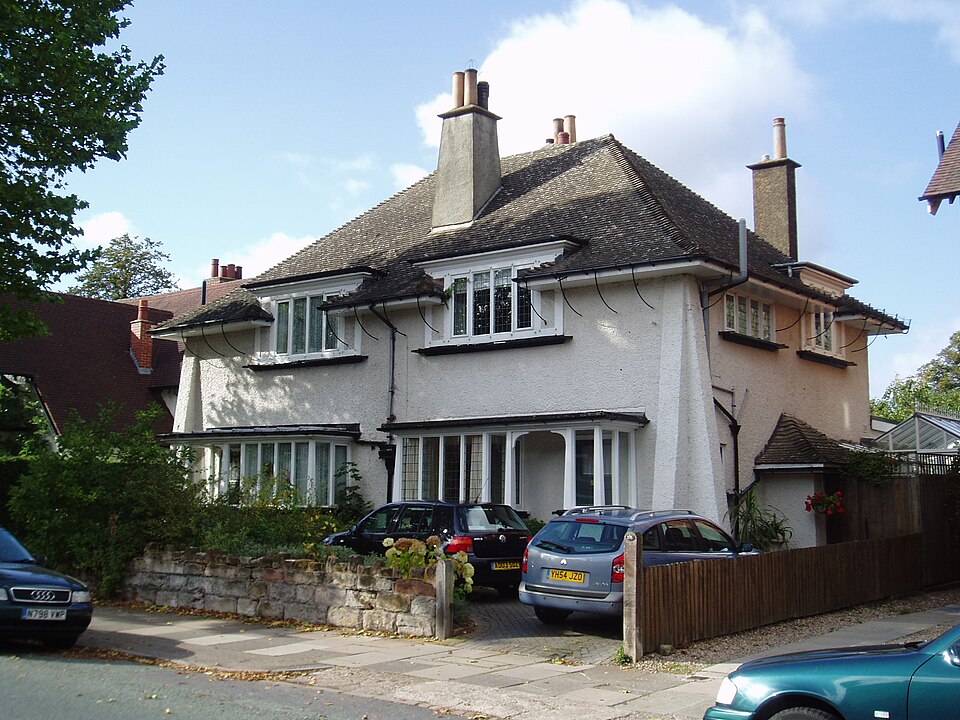
In 1879, the brothers George and Richard Cadbury moved their chocolate factory to the countryside, south of Birmingham. They were Quakers, a Christian group who cared about social justice: they wanted their workers to have a better life than in the poor, polluted parts of cities.
They built a village, Bournville: houses with gardens, parks, sports fields, a swimming pool, schools. There was no pub. This “factory in a garden” is an example of an ideal town, a dream that came true.
Roald Dahl was born in Wales in 1916. His parents were Norwegian. In Boy, he tells us that Cadbury sent boxes of new chocolates to his school for the boys to taste and give marks. He dreamed of working in a laboratory inventing chocolates: this real memory inspired Willy Wonka's imaginary factory.
Did you know? → tap a card
I listen → from Bournville to Wonka
Listen. Write down two dates and what happened. Find three verbs in the past simple.
I watch
Video: “Cadbury's Bournville factory, 1930's” · channel Huntley Film Archives (archive film) · watch on YouTube. The video only loads when you tap (youtube-nocookie player).
- This film has almost no sound: watch carefully. Write down three things the workers do (They are packing… They made…).
- Write down two machines or objects.
- Write two sentences in the past simple: In the 1930s, workers…
The lessons in this learning journey (6)
- Bournville: a real village built by a chocolate family.
- Watch an archive film: the factory in the 1930s.
- Roald Dahl's childhood: chocolate testers at school.
- Grammar: regular and irregular past, did / didn't.
- Real or imaginary? Bournville vs Wonka's factory.
- Final task: tell the story of your dream factory (in the past).
- “My dream factory was in…”
- “Every day, the workers made…”
- “One day, …”
- “The children didn’t…”
- “In the end, …”
For the teacher → goals and official curriculum
- Theme 3 “Real and imaginary worlds” → topic: real worlds and dream worlds, from the Cadbury family's ideal village to Roald Dahl's imagination.
- Understand a biography and a story in the past; tell a past experience.
- Grammar: past simple of regular and irregular verbs in positive sentences, negative sentences (didn't) and questions (Did…?); ago, last, in + year.
- Compare a real place (Bournville) and an imaginary place (Willy Wonka's chocolate factory).
Texts and materials: Photos of Bournville village; archive film of the factory (1930s); Roald Dahl, Charlie and the Chocolate Factory (1964) and Boy (1984), introduction and short summarised extracts.
Theme 3 “Real and imaginary worlds”. Source: French national English curriculum for lower secondary school, decree of 5 May 2025, BO no. 22 of 29 May 2025 (in force in 5e from September 2026).
Fill in and choose
Match each verb with its past simple form
Tap an item in the first column, then its partner in the second.
Real or imaginary?
Tap a word, then the right box.
Worksheet to fill in (paper or ENT)
The same learning journey, to print or to put on the ENT. For a PDF, choose “Save as PDF” in the print window.