Around the table: British meals
Full English breakfast, Sunday roast, fish and chips and cream tea: I discover British meals and I learn to talk about quantities and to give advice.
Quantities and advice
You can count some words (eggs), but not others (bread). Tap the cards to avoid the traps.
My words → tap a card: it turns over and I hear the word
Culture → British meals
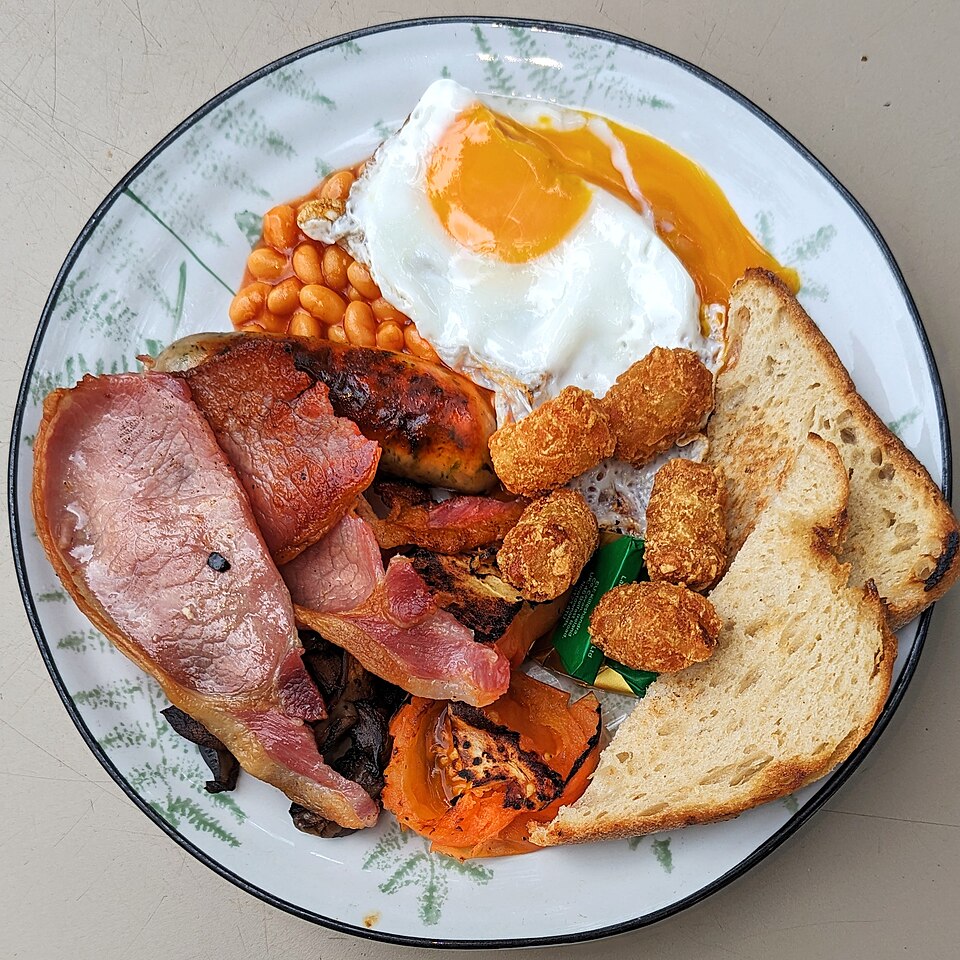
The full English breakfast (eggs, bacon, sausages, baked beans, mushrooms, grilled tomato, toast) is mostly a weekend or holiday meal. During the week, many British people have cereal or toast.
Lunch is often quick: a sandwich or a packed lunch. The main meal is in the evening, often at about 6 or 7 pm. Depending on the region and the family, people call it dinner or tea. On Sundays, many families share a Sunday roast.
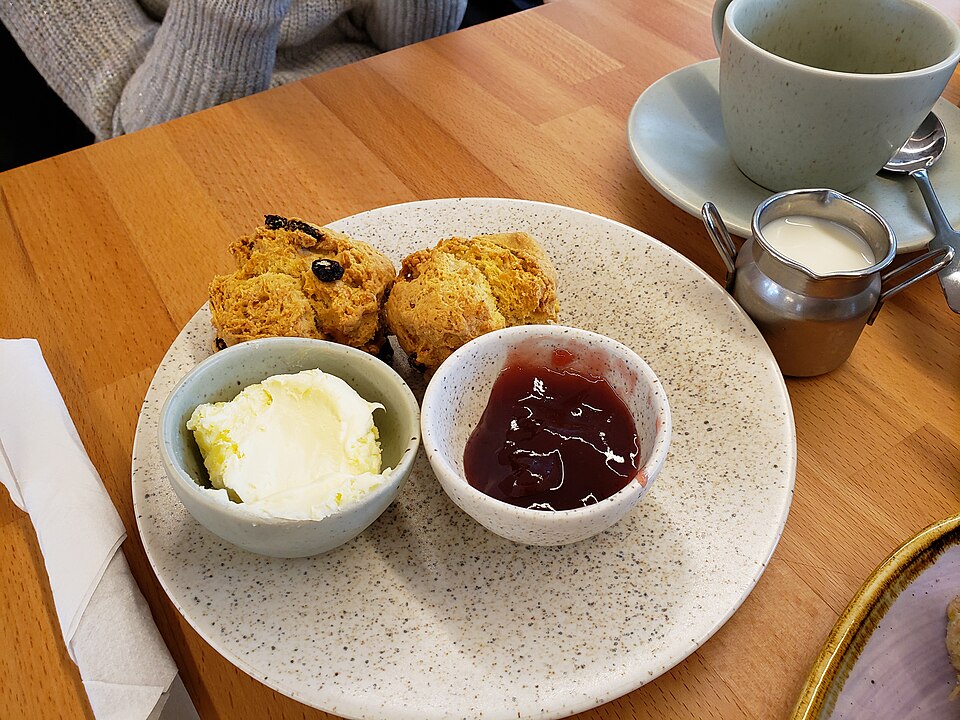
Around 1840, Anna, Duchess of Bedford, started serving tea and cakes at about 4 pm: this is afternoon tea. The cream tea (scones, clotted cream, jam) divides Devon and Cornwall: cream first or jam first?
Did you know? → tap a card
I listen → at the café
Listen without reading. Write down what the customer orders: how many eggs? what drink? Then act out the dialogue in pairs.
I watch
Video: “How do people talk about their favourite British food?” · channel BBC Learning English · watch on YouTube. The video only loads when you tap (youtube-nocookie player).
- Write down three dishes you hear.
- Write down one phrase to say you like something (I love…, my favourite…).
- Tell your partner your favourite dish in one sentence.
The lessons in this learning journey (6)
- What's for breakfast? Food words and mealtimes.
- At the café: ordering politely (Can I have…? I'd like…).
- How much / how many? Quantities.
- Afternoon tea and cream tea: a tradition (and a debate!).
- Recipe: make your own scones (imperative, should).
- Final task: present a British meal to the class.
- “This meal is called…”
- “You need some… / There isn’t any…”
- “First, … Then, …”
- “You should… / You shouldn’t…”
- “It’s delicious with…”
For the teacher → goals and official curriculum
- Theme 2 “Everyday life: places, routines, seasons” → topic: around the table.
- Understand a menu, a recipe, a conversation in a café; order politely.
- Grammar: countable and uncountable nouns, some / any, much / many, a lot of; should / shouldn't; the imperative in a recipe.
- Discover British mealtimes and food.
Texts and materials: A British café menu; a scone recipe; a BBC Learning English video.
Theme 2 “Everyday life: places, routines, seasons”. Source: French national English curriculum for lower secondary school, decree of 5 May 2025, BO no. 22 of 29 May 2025 (in force in 5e from September 2026).
Fill in and choose
Match each dish with its description
Tap an item in the first column, then its partner in the second.
Countable or uncountable?
Tap a word, then the right box.
Worksheet to fill in (paper or ENT)
The same learning journey, to print or to put on the ENT. For a PDF, choose “Save as PDF” in the print window.