Cook and the Māori: an encounter and its memory
October 1769: James Cook's ship, the Endeavour, arrives in New Zealand. The first meeting with the Māori ends in tragedy. Two and a half centuries later, what is left of this meeting? I compare points of view with relative clauses.
Relative clauses and contrast
Relative clauses give information about a noun; whereas and while contrast two points of view. Tap the cards.
My words → tap a card: it turns over and I hear the word
Culture → Aotearoa, two worlds meet
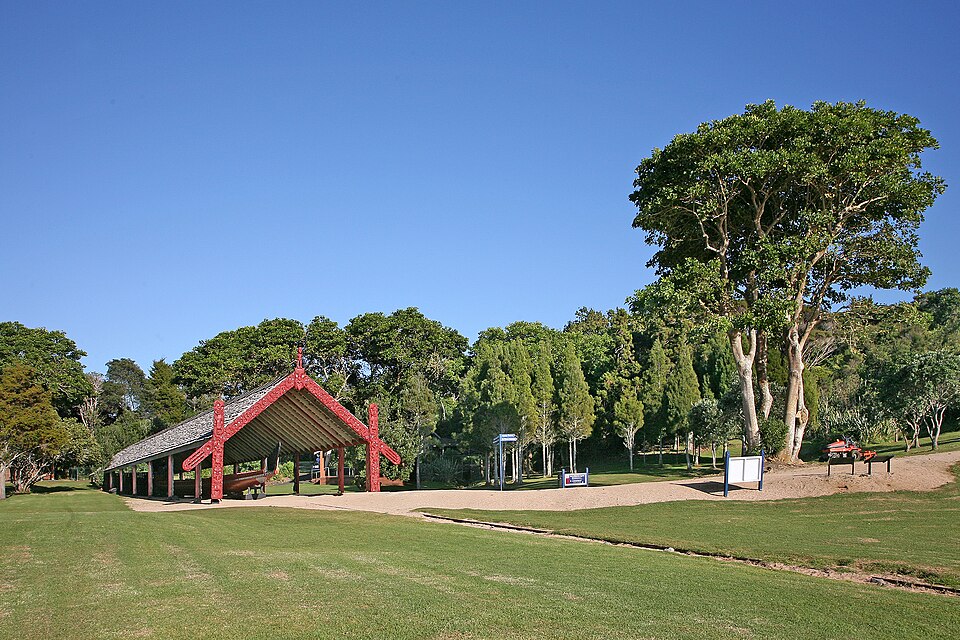
The Māori came from Polynesia in canoes (waka) and settled in Aotearoa around the 13th century. In October 1769, James Cook's ship, the Endeavour, arrived at Tūranganui-a-Kiwa, on the east coast. During the first meetings, misunderstandings led to the deaths of several Māori. Tupaia, a Tahitian priest on board, was the interpreter.
On 6 February 1840, Māori chiefs and the British Crown signed the Treaty of Waitangi. The English and Māori versions don't say exactly the same thing, which caused conflicts over land that still go on. Waitangi Day is now the national holiday.
Since 1975, a tribunal has looked into breaches of the treaty. Te reo Māori has been an official language since 1987. In 2019, 250 years after Cook arrived, the British High Commissioner publicly expressed regret for the Māori killed in 1769.
Did you know? → tap a card
I listen → two points of view
Listen. Write down what the meeting means for the British and for the Māori. Find who, which and whose.
I watch
Video: “Captain Cook: Encounters That Changed History” · channel Australian National Maritime Museum · watch on YouTube. The video only loads when you tap (youtube-nocookie player).
- Write down two places Cook visited.
- Write down how the museum presents the two points of view.
- Write a sentence with whereas.
I watch too
Video: “Early Encounters (The Aotearoa History Show)” · channel RNZ (New Zealand public radio) · watch on YouTube. The video only loads when you tap (youtube-nocookie player).
- Write down one fact about the first meetings from the Māori point of view.
The lessons in this learning journey (5)
- Aotearoa New Zealand: map and first words of te reo Māori.
- 1769: the Endeavour arrives (maritime museum video).
- Two points of view on the same encounter.
- The Treaty of Waitangi (1840) and Waitangi Day.
- Final task: a bilingual museum panel.
- “This panel presents…”
- “Cook, who…, arrived in…”
- “The Māori, whose…, …”
- “For the British, it was…, whereas for the Māori, …”
- “Today, …”
For the teacher → goals and official curriculum
- Theme 1 “Meeting others” → topic: peoples meeting, James Cook and the Māori, between violence and reconciliation. 2020 theme: meeting other cultures.
- Understand museum documents and videos from Australia and New Zealand; compare the European and Māori points of view.
- B1 grammar: relative clauses with who, which, that, whose; contrast with whereas and while.
- Final task: a bilingual museum panel showing both points of view.
Texts and materials: Videos by the Australian National Maritime Museum and RNZ (New Zealand public radio); a photo of the Waitangi Treaty Grounds.
Theme 1 “Meeting others”. Source: French national curriculum for modern languages, cycle 4, BO no. 31 of 30 July 2020 (in force in 3e in 2026-2027); matching theme of the English curriculum, BO no. 22 of 29 May 2025, which will apply in 3e from September 2028.
Fill in and choose
Match each Māori word with its meaning
Tap an item in the first column, then its partner in the second.
Who, which or whose?
Tap a word, then the right box.
Worksheet to fill in (paper or ENT)
The same learning journey, to print or to put on the ENT. For a PDF, choose “Save as PDF” in the print window.