From breaker boys to teen jobs: young people and work
In 1911, ten-year-old boys sorted coal in the mines of Pennsylvania. Today, American teenagers babysit or work as lifeguards in the summer. I compare then and now with modals of obligation.
Obligation and absence of obligation
Be careful: mustn't (forbidden) and don't have to (not necessary) mean very different things. Tap the cards.
My words → tap a card: it turns over and I hear the word
Culture → Lewis Hine, a camera against child labour
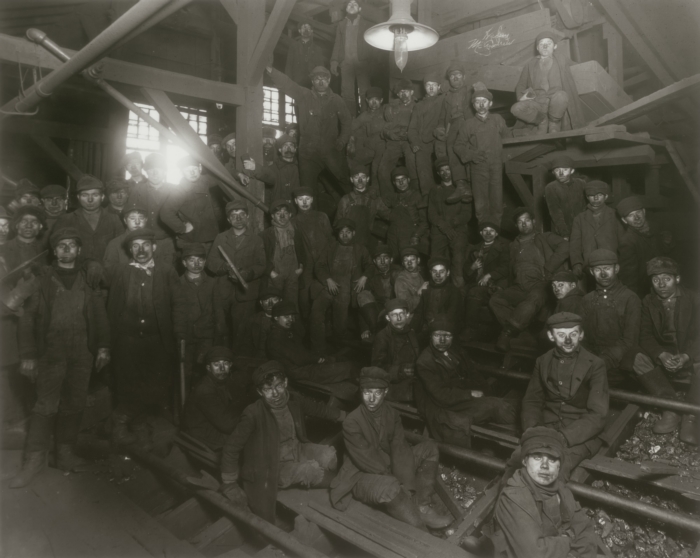
In the early 20th century, nearly two million children worked in the United States: in cotton mills, canneries, coal mines, in the streets. The breaker boys sorted coal with their bare hands, ten hours a day, in the dust.
A former teacher, Lewis Hine photographed these children for the National Child Labor Committee, founded in 1904. He sometimes pretended to be a Bible seller or an inspector to get into factories, and he wrote down the children's age and height. His thousands of photos shocked the public.
In 1938, the Fair Labor Standards Act set a minimum age for work and limited the hours of young workers. Today, many American teenagers have a teen job in the summer or after school, to earn money and experience. But in the world, the International Labour Organization thinks that about 138 million children still work.
Did you know? → tap a card
I listen → work, then and now
Listen. Write down what children had to do in 1911 and what teenagers don't have to do today. Find mustn't and don't have to.
I watch
Video: “Cotton Mill Girl: Behind Lewis Hine's Child Labor Photograph” · channel TIME (100 Photos) · watch on YouTube. The video only loads when you tap (youtube-nocookie player).
- Describe the photo you see.
- Write down what we learn about the girl.
- Write one sentence with had to and one with weren't able to.
I watch too
Video: “These photos ended child labor in the US” · channel Vox · watch on YouTube. The video only loads when you tap (youtube-nocookie player).
- Write down two tricks Lewis Hine used to photograph the children.
The lessons in this learning journey (6)
- Jobs young people do: brainstorming.
- 1911: Lewis Hine's photographs.
- A photographer who changed the law.
- Grammar: have to, must, mustn't, don't have to.
- Teen jobs today: babysitter, lifeguard, cashier.
- Final task: applying for a summer job.
- “Hello, my name is… (a real or invented name) and I’m applying for…”
- “I’m good at…”
- “I have to… / I don’t have to…”
- “I can start on…”
- “Thank you for listening.”
For the teacher → goals and official curriculum
- Theme 2 “Work yesterday, today and tomorrow” → topics: has child labour really disappeared?; teen jobs, American teenagers' part-time jobs then and now. 2020 theme: school and society.
- Understand documentary photos (Lewis Hine) and a video (TIME); compare two periods.
- Grammar B1: have to / must / mustn't / don't have to; be able to; infinitive clauses (want sb to, expect sb to).
- Final task: a spoken application for a summer job.
Texts and materials: Lewis Hine, photos for the National Child Labor Committee (1908-1912, Library of Congress); TIME (100 Photos) and Vox videos.
Theme 2 “Work yesterday, today and tomorrow”. Source: French national curriculum for modern languages, cycle 4, BO no. 31 of 30 July 2020 (in force in 3e in 2026-2027); matching theme of the English curriculum, BO no. 22 of 29 May 2025, which will apply in 3e from September 2028.
Fill in and choose
Match each job with its description
Tap an item in the first column, then its partner in the second.
Obligation, prohibition or not necessary?
Tap a word, then the right box.
Worksheet to fill in (paper or ENT)
The same learning journey, to print or to put on the ENT. For a PDF, choose “Save as PDF” in the print window.