Votes for women! Suffragettes and suffragists
“Deeds, not words”: in the early 20th century, British and American women marched, were arrested and went on hunger strike to win the right to vote. I tell the story of their fight and I express regrets and wishes.
Permission, obligation, regret
To talk about what was allowed or forbidden, and to express a wish or a regret. Tap the cards.
My words → tap a card: it turns over and I hear the word
Culture → the fight for women's right to vote
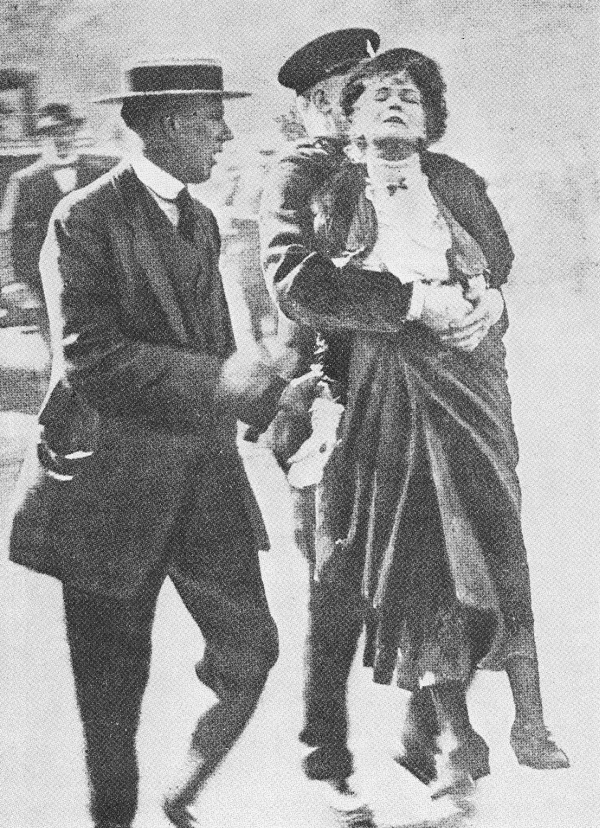
In the UK, suffragists had asked peacefully for women's votes since the 19th century. In 1903, Emmeline Pankhurst founded the Women's Social and Political Union (WSPU), with the motto “Deeds, not words”: the activists, called suffragettes by a newspaper, broke shop windows, chained themselves to railings and went on hunger strike in prison. In 1913, Emily Wilding Davison died after she ran in front of the King's horse at the Epsom Derby.
In 1918, women over 30 (with conditions) got the vote; in 1928, women finally had the same rights as men, at 21.
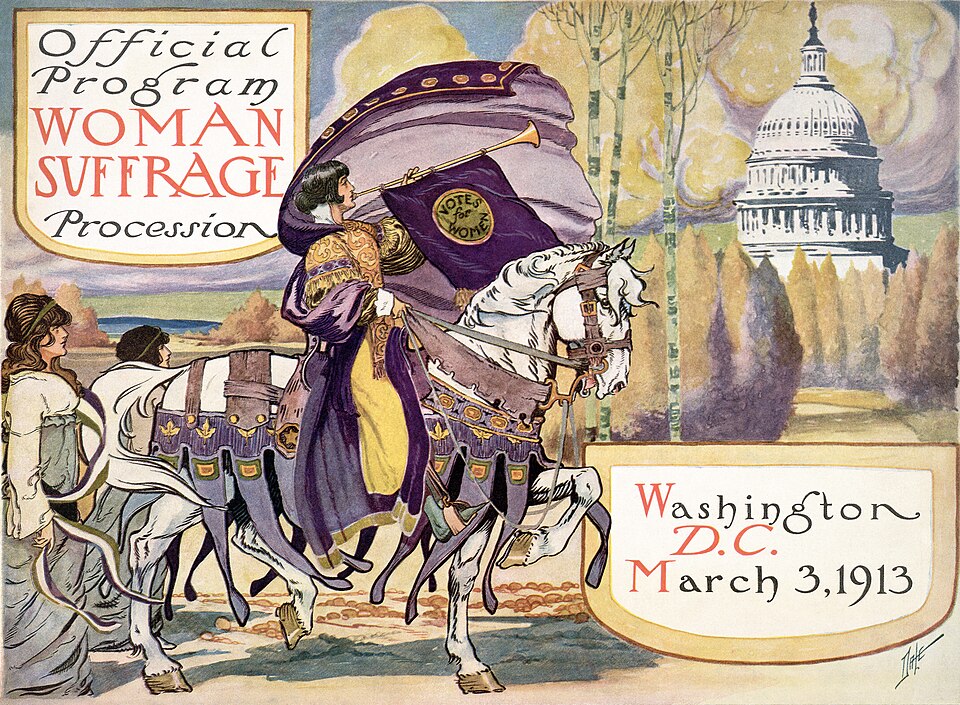
In the United States, on 3 March 1913, the day before President Wilson's inauguration, more than 5,000 women marched in Washington. The 19th Amendment gave women the right to vote in 1920.
Did you know? → tap a card
I listen → women in 1900
Listen. Write down what women couldn't do, what they had to do, and what changed in 1918. Find the two sentences with wish.
I watch
Video: “The historic women's suffrage march on Washington” · channel TED-Ed · watch on YouTube. The video only loads when you tap (youtube-nocookie player).
- Write down who organised the march and why they chose the date.
- Write down what happened during the march.
- Write one sentence with weren't allowed to and one with I wish.
The lessons in this learning journey (6)
- Who could vote in 1900?
- The WSPU: deeds, not words.
- The 1913 Woman Suffrage Procession in Washington.
- Grammar: could, be allowed to, had to.
- Wishes and regrets: I wish…
- Final task: a suffragette's speech.
- “In 1913, women could not…”
- “We were not allowed to…”
- “We had to…”
- “Today, women can…”
- “I am proud that…”
For the teacher → goals and official curriculum
- Theme 5 “Forms of commitment” → topic: political commitment for women's rights. 2020 theme: school and society; meeting other cultures.
- Understand a video (TED-Ed) and documents from the time (poster, photo, autobiography).
- B1 grammar: permission and prohibition in the past (were not allowed to, couldn't); obligation (had to); wishes and regrets (I wish I were…, I wish they had…).
- Final task: a suffragette's speech in 1913, then her answer today.
Texts and materials: The official programme of the Washington march (1913); a photo of Emmeline Pankhurst's arrest (1914); Emmeline Pankhurst, My Own Story (1914), LibriVox.
Theme 5 “Forms of commitment”. Source: French national curriculum for modern languages, cycle 4, BO no. 31 of 30 July 2020 (in force in 3e in 2026-2027); matching theme of the English curriculum, BO no. 22 of 29 May 2025, which will apply in 3e from September 2028.
Fill in and choose
Match each date with the event
Tap an item in the first column, then its partner in the second.
Permission, prohibition or obligation?
Tap a word, then the right box.
Worksheet to fill in (paper or ENT)
The same learning journey, to print or to put on the ENT. For a PDF, choose “Save as PDF” in the print window.